sprayed
coatings
removal
Sprayed Asbestos Coatings were found in buildings constructed or refurbished between the 1950s and late 1970s. They became especially popular because they provided excellent fire resistance, thermal insulation, acoustic sound reduction, condensation control and structural steel fire protection. Many sprayed coatings contained very high percentages of crocidolite and amosite due to their excellent heat resistance and fibre strength.
what are asbestos sprayed coatings?
Facts:
Asbestos Type: Crocidolite(most common)
Amosite (very common)
Chrysotile (less common)
Colour: Blue, Brown, White
Commonly Found: Ceiling & Roof Areas, Plant Rooms & Boiler Rooms, Public Buildings, Industrial & Commercial Premises
Popular In: Structural Steel Fireproofing, Industrial Insulation Systems, Ceiling & Wall Spray Coatings, Shipbuilding and Power Station Applications
Good to know: Asbestos sprayed coatings are considered one of the most dangerous asbestos containing materials because the fibres are loosely bound and easily released into the air. Even light disturbance can create significant airborne contamination.
Risk: Extremely High

were widely used in commercial, industrial, and public buildings for fire protection and insulation purposes. They are most commonly found in buildings constructed or refurbished between the 1950s and late 1970s.
Many sprayed coatings contained high percentages of Crocidolite (Blue Asbestos) and Amosite (Brown Asbestos. These asbestos types are strongly associated with serious respiratory diseases.
Asbestos Sprayed Coatings
CAN YOU IDENTIFY IT BY SIGHT?
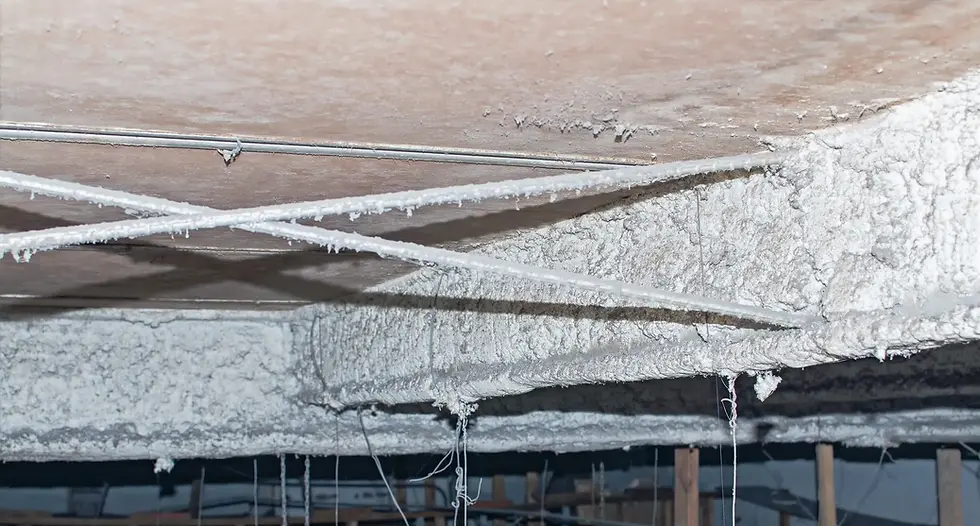
Sprayed asbestos is often concealed behind suspended ceilings, boxing and panels, fireproof cladding and later refurbishment materials. This means asbestos may remain undiscovered until refurbishment or demolition work begins.
- Sprayed coatings do not always look identical. They may appear fluffy, rough textured, cement like, fibrous, painted over, and white, grey, or blue-grey in colour.
- Because sprayed asbestos coatings are highly friable, even minor disturbance can release dangerous airborne fibres.
Decorative Textured Coatings was commonly blended into sprayed coatings. Amosite is part of the Amphibole asbestos family. It contains straight, needle like fibres and was commonly used in commercial buildings, plant rooms, ceiling voids and boiler areas. It usually contains typically 20 - 75% asbestos in sprayed coatings.
types of asbestos found in sprayed coatings
Amosite (Brown Asbestos)
was less commonly used alone in sprayed coatings. It was often combined with amosite or crocidolite in mixed asbestos coatings. It has curly, flexible fibres and is part of the Serpentine asbestos family. Its typical asbestos content ranged from 5% to 40%.
Chrysotile (White Asbestos)
was the most commonly used asbestos type in sprayed coatings and was heavily used in structural steel fireproofing, industrial plants, shipbuilding, and power stations. It is part of the Amphibole asbestos family and its typical content used in sprayed coatings was 30% - 85%.
Crocidolite (Blue Asbestos)
What You Should Know
Sprayed Coatings are one of the most dangerous asbestos materials. Do not drill into coatings, scrape surfaces, sand or cut materials, pressure wash areas or remove coatings yourself. Disturbing sprayed asbestos can rapidly contaminate entire areas of a building.
Sprayed Coating works are usually licensed work and require HSE Licensed asbestos contractors. Because fibre release is extrememly high, sprayed coating removal is among the most tightly controlled asbestos work in the UK.

our projects
more projects
coming soon